Custom Software Cost in India (2026 Price Guide)
What does custom software cost in India in 2026? Real price bands — MVPs from ₹2L, enterprise from ₹10L — plus timelines and what actually drives the cost.
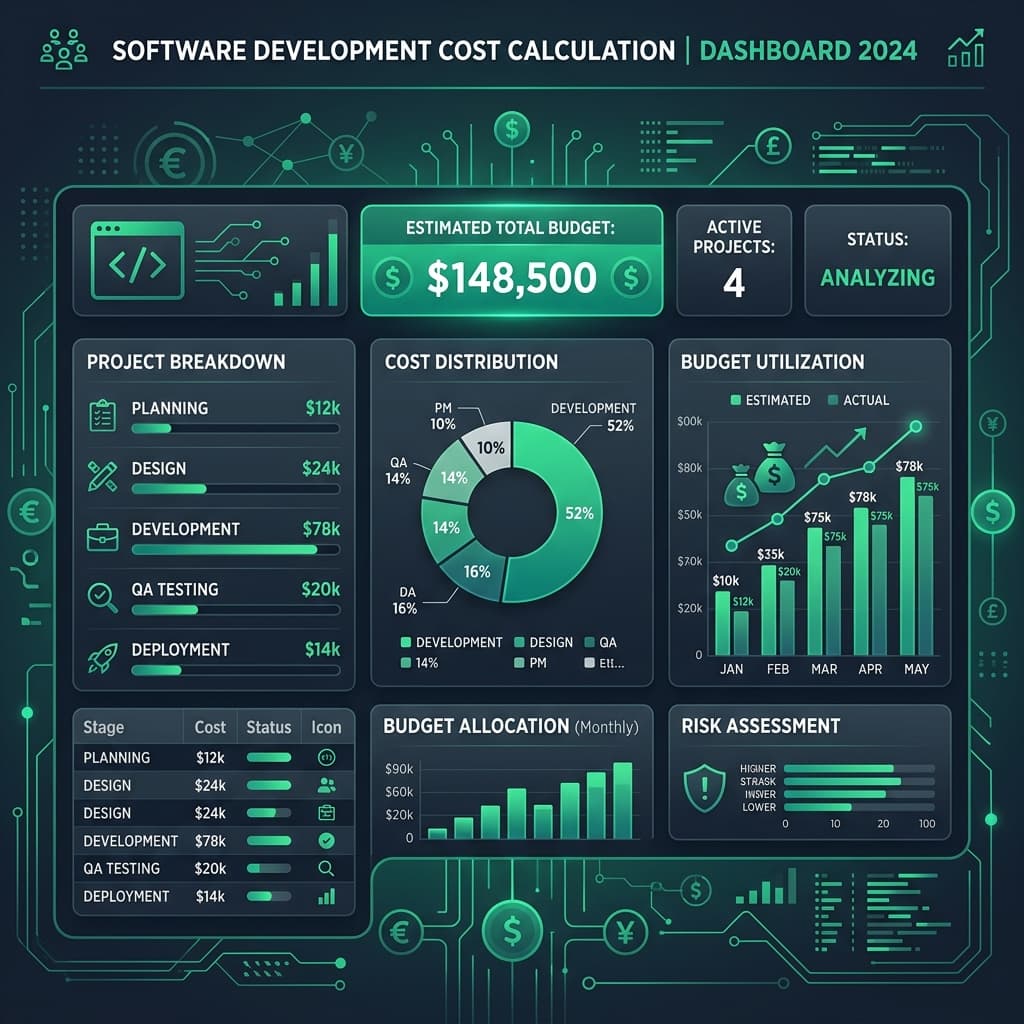
- MVP custom software in India ranges from ₹2L – ₹5L ($2,500 – $6,000) for 4–6 week launches.
- Full-scale enterprise SaaS & ERP platforms range from ₹10L – ₹25L+ with dedicated engineering pods.
- White-label base engines cut initial development costs by up to 65% compared to building from scratch.
"What does custom software cost in India in 2026? Real price bands — MVPs from ₹2L, enterprise from ₹10L — plus timelines and what actually drives the cost."
Quick answer: what custom software costs in India
Custom software development in India typically costs between ₹2,00,000 and ₹25,00,000+ in 2026, depending on scope. A minimum viable product — a web portal plus a mobile app with core workflows — starts around ₹2L–₹5L ($2,500–$6,000) and ships in 4–6 weeks. Growth-stage platforms with custom workflows, microservices and multiple integrations run ₹5L–₹10L. Enterprise systems needing dedicated engineering pods, private cloud and full IP transfer are quoted on scope, usually ₹10L–₹25L+. Three things drive price more than hourly rates: architectural complexity, third-party integrations (payment gateways, WhatsApp, AI models), and compliance standards like PCI-DSS or ISO-27001. Using production-tested base engines instead of rebuilding common modules can cut initial cost by up to 65%. Budget 15–25% of build cost per year for maintenance. Nexacos delivers fixed-scope MVPs from ₹5L with full source-code ownership.
1. The Real Factors Driving Software Costs in 2026
Software development pricing is no longer determined by simple hourly rates. Modern engineering costs are driven by system architectural complexity, third-party integrations (payment gateways, WhatsApp APIs, AI models), and security/compliance standards like PCI-DSS or ISO-27001.
2. Cost Breakdown by Development Tier
A MVP software build (web portal + mobile app) starts at ₹2 Lakhs with rapid 3-4 week deployment. Growth-stage platforms requiring custom workflows and microservices sit at ₹5L - ₹10L. Enterprise IP transfer and private VPC Kubernetes setups are quoted on a custom scope basis.
3. White-Label vs Custom Build-from-Scratch
Building core authentication, payment flows, and admin dashboards from scratch wastes 3 to 4 months of engineering time. Leveraging production-tested base engines allows startups to allocate budget towards unique business logic and user experience.
"The true measure of software investment isn’t initial build cost—it’s speed to market and system stability under user load."
Frequently Asked Questions
How much does it cost to build custom software in India in 2026?
Between ₹2 lakh and ₹25 lakh+. MVPs start at ₹2L–₹5L and ship in 4–6 weeks, growth-stage platforms run ₹5L–₹10L, and enterprise systems are ₹10L–₹25L+.
How long does custom software take to build?
An MVP ships in 4–6 weeks, a mid-complexity platform in 8–12 weeks, and an enterprise system in 4–6 months.
What makes software cost more?
Architectural complexity, third-party integrations like payment gateways, WhatsApp and AI models, and compliance standards such as PCI-DSS or ISO-27001 — far more than hourly rates.
Is it cheaper to build software in India than the US?
Yes. Indian teams typically charge $20–$50 per hour, making equivalent builds 50–70% cheaper than US-based development.
Do I own the source code?
With Nexacos, yes — every project includes full source-code and IP handover.
Related Articles
How to Choose a Software Company in India (2026)
A practical 2026 checklist for choosing a custom software development company in India — vetting portfolios, pricing, IP ownership, communication and red flags.
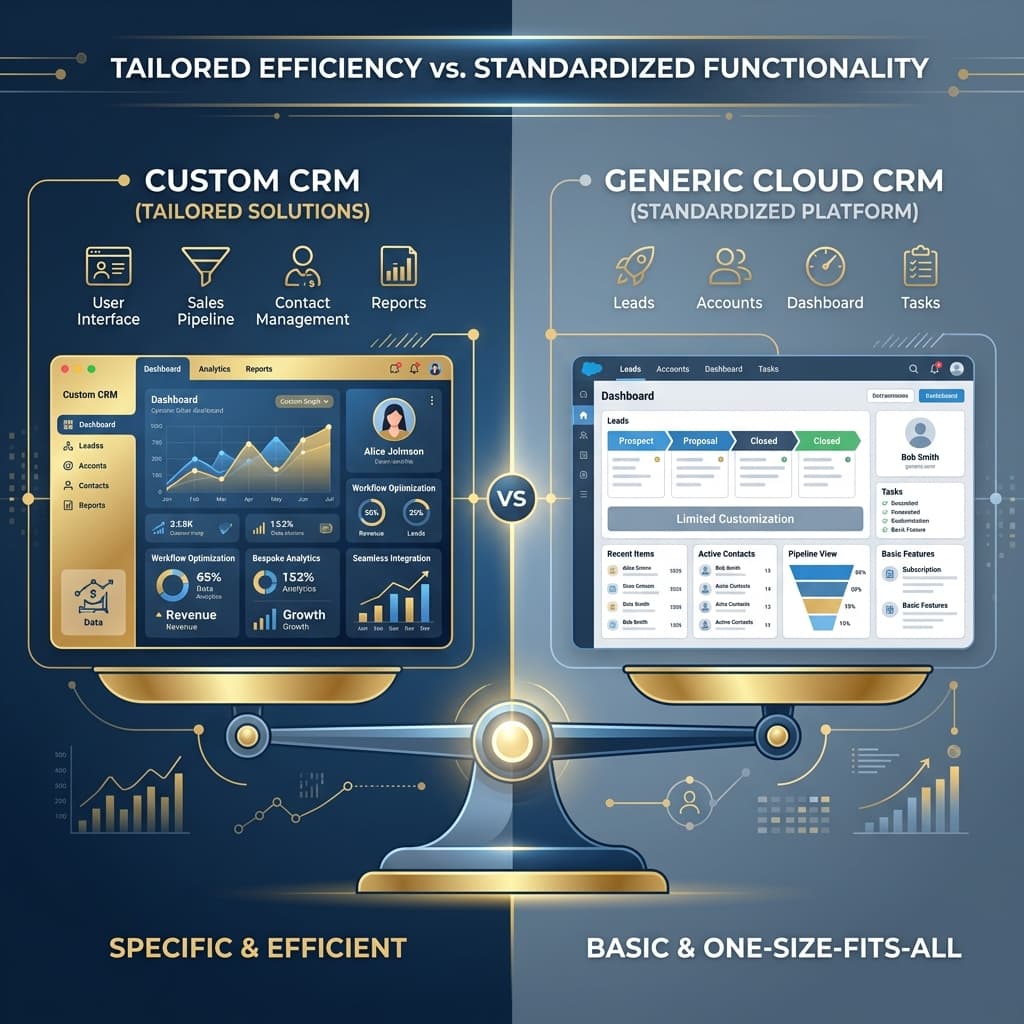
Custom CRM vs Salesforce: Which is Right for Your Business?
A detailed comparison of building a custom CRM vs using Salesforce — costs, flexibility, scalability, and when each makes sense.

The Future of Fintech in India: Trends to Watch in 2026
As India continues its digital revolution, we explore the key fintech trends that are shaping the economy.