Food Delivery App Cost in India (2026 Guide)
How much does a food delivery app cost in India in 2026? Feature-by-feature price breakdown for customer, kitchen and rider apps, plus timeline and tech stack.
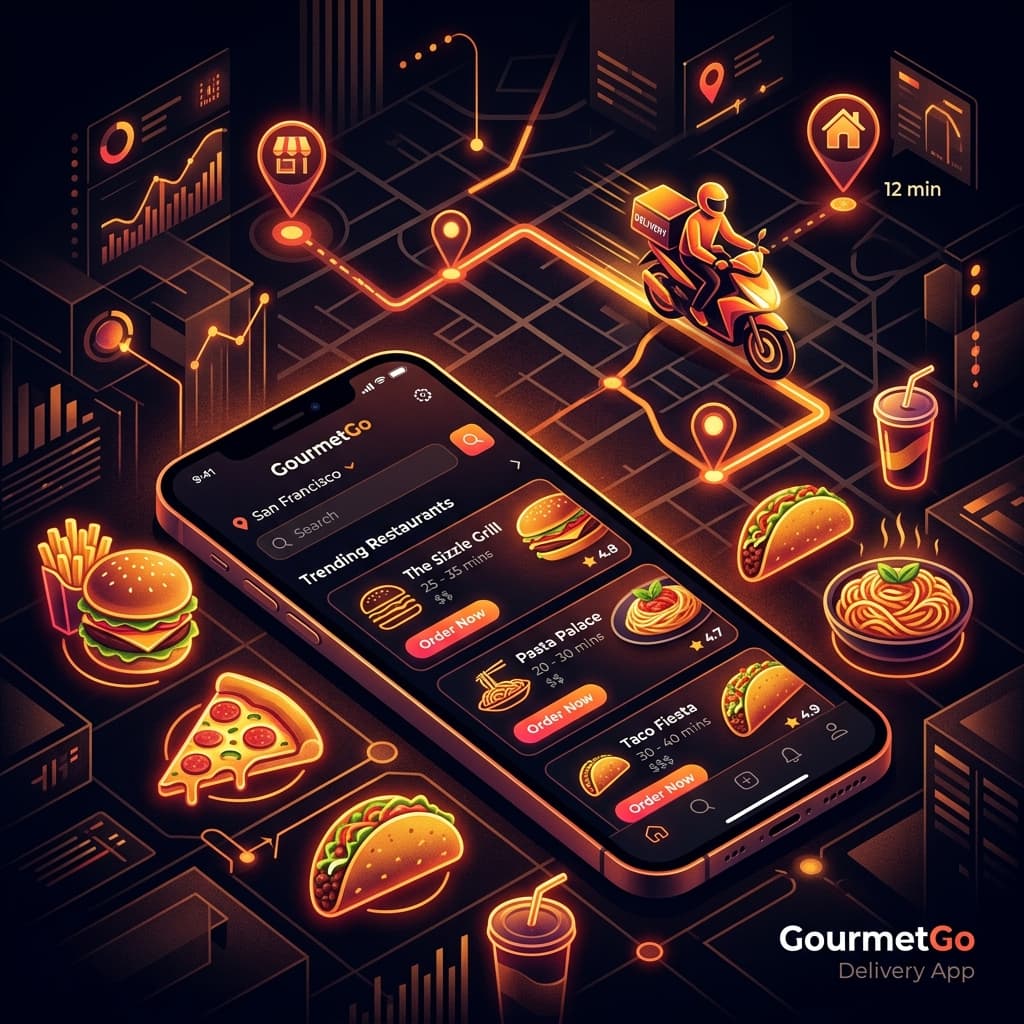
- Building a proprietary food delivery app saves 20-30% in third-party aggregator commission fees.
- Real-time GPS tracking with Socket.io & Mapbox provides sub-second delivery updates.
- Split payment settlements automatically divide earnings between restaurants and delivery partners.
"How much does a food delivery app cost in India in 2026? Feature-by-feature price breakdown for customer, kitchen and rider apps, plus timeline and tech stack."
Quick answer: what a food delivery app costs
A restaurant or food-delivery app in India costs roughly ₹2,00,000 to ₹20,00,000 in 2026, depending on how many sides of the marketplace you build. A single-restaurant ordering app (customer app, digital menu, payments) starts around ₹2L–₹4L and launches in 3–5 weeks. A full multi-vendor platform — customer app, restaurant/kitchen dashboard, and delivery-partner app with live GPS tracking — typically runs ₹8L–₹20L. The biggest cost drivers are real-time order tracking, multi-vendor management, payment-gateway and UPI integration, and push-notification infrastructure. Cross-platform frameworks like React Native cut cost 30–40% versus separate native builds. Budget 15–20% of build cost yearly for maintenance and scaling. To compete with Zomato or Swiggy you don’t need their full feature set on day one — launch a focused MVP, then add loyalty, analytics and AI recommendations. Nexacos ships a complete restaurant ordering system from ₹2L in about 3 weeks.
1. The 3 Core App Components You Need
A successful food delivery platform requires 3 synchronized components: Customer Ordering App (iOS & Android), Restaurant Management Dashboard, and Delivery Partner App with live route optimization.
2. Estimating Development Timelines & Budget
Turnkey food delivery engines launch in 3 to 5 weeks. Custom feature additions like multi-brand cloud kitchens or loyalty subscription tiers typically add 2 weeks to the deployment timeline.
3. Direct Ordering vs Commission Aggregators
By driving loyal customers to your owned food delivery platform, restaurant brands increase order profitability by retaining 100% of order value and direct customer contact data.
"Owning your digital ordering channel is the single highest-ROI strategy for multi-outlet restaurant chains in 2026."
Frequently Asked Questions
How much does a food delivery app cost in India?
₹2L–₹4L for a single-restaurant ordering app; ₹8L–₹20L for a full multi-vendor platform with customer, kitchen and rider apps.
How long does it take to build a restaurant app?
A focused ordering app launches in about 3–5 weeks; a full multi-vendor marketplace takes 10–16 weeks.
What features does a food delivery app need?
A customer ordering app, digital menu, real-time kitchen dashboard, delivery tracking, UPI/card payments, and push notifications.
Which tech stack is best for a food delivery app?
React Native or Flutter for the apps with a Node.js backend and real-time sockets. Cross-platform cuts cost 30–40%.
Can I compete with Zomato or Swiggy?
Yes — launch a focused MVP first, then add loyalty, analytics and AI recommendations as you grow.
Related Articles
The Future of Fintech in India: Trends to Watch in 2026
As India continues its digital revolution, we explore the key fintech trends that are shaping the economy.
Scaling Your SaaS: Lessons from Building Enterprise ERPs
Scaling a SaaS platform requires more than just adding servers. It requires a fundamental shift in architecture.
Why White-Label Software is the Fastest Path to Market
Building from scratch is slow. White-label solutions allow you to launch in weeks instead of months.