AI Agents vs Traditional Automation: Why MCP is the Future
Model Context Protocol (MCP) is changing how businesses build AI automation. Learn why AI agents are replacing RPA and traditional workflows.
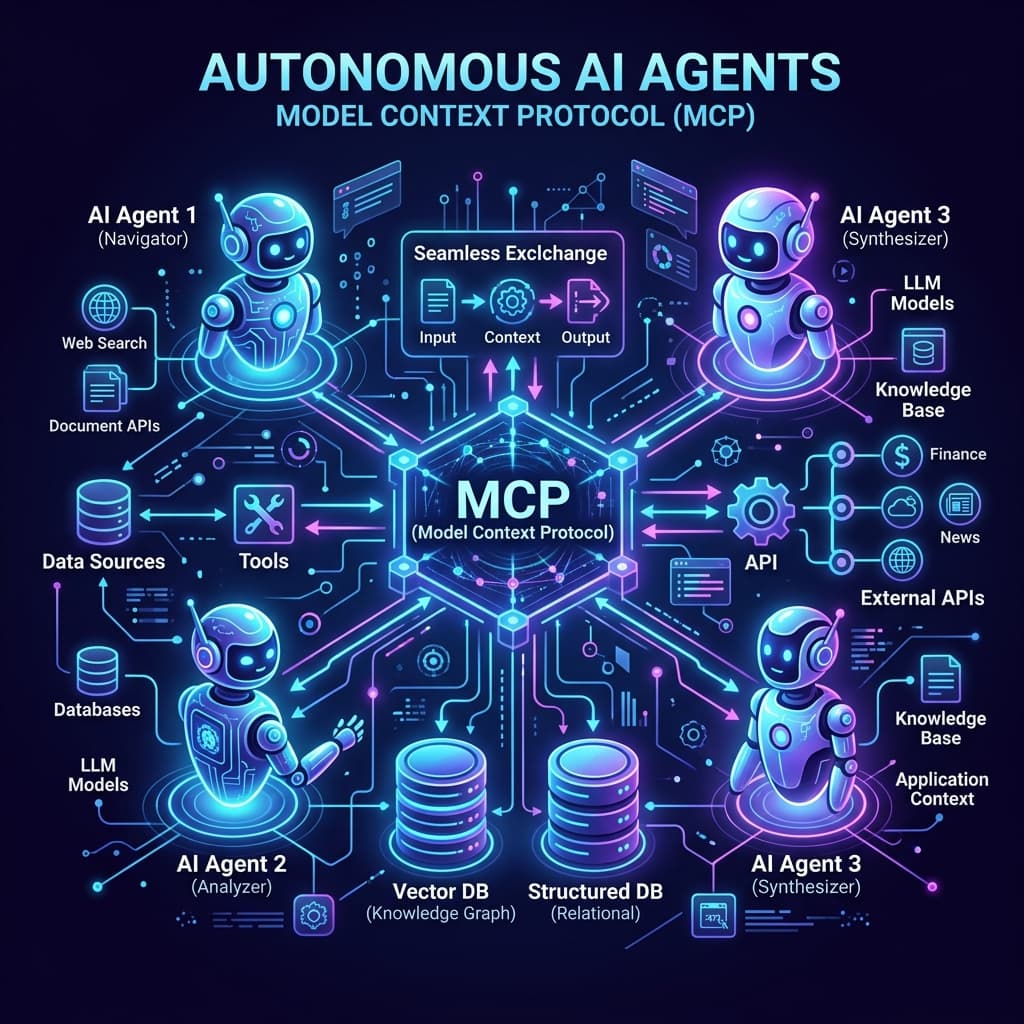
- Model Context Protocol (MCP) enables LLMs to execute multi-step database and API actions safely.
- Autonomous AI agents adapt to unstructured data, unlike fragile legacy RPA scripts.
- Businesses report a 70% reduction in manual data entry and customer support ticket resolution times.
"Model Context Protocol (MCP) is changing how businesses build AI automation. Learn why AI agents are replacing RPA and traditional workflows."
1. Beyond Static Bots: The Shift to MCP AI Agents
Traditional RPA relies on rigid if-else rules that break when UI elements change. AI agents powered by MCP communicate dynamically with backend APIs, database schemas, and cloud servers.
2. Enterprise Security & Protocol Safeguards
Deploying autonomous agents requires strict permission boundaries. MCP enforces schema-validated tool calling, OAuth token scope checks, and mandatory human-in-the-loop approvals for sensitive operations.
3. Real-World Commercial Impact
From automated invoice processing to intelligent lead qualification, AI agent workflows operate 24/7 with zero human fatigue and sub-second execution speeds.
"The future of enterprise software is conversational interfaces backed by autonomous, schema-guided AI agents."
Related Articles
How to Build an AI Chatbot for Your Business (No-Code to Custom)
From simple FAQ bots to advanced AI assistants — learn the different approaches to building a chatbot and which one is right for you.

The Future of Fintech in India: Trends to Watch in 2026
As India continues its digital revolution, we explore the key fintech trends that are shaping the economy.

Scaling Your SaaS: Lessons from Building Enterprise ERPs
Scaling a SaaS platform requires more than just adding servers. It requires a fundamental shift in architecture.